
Setohonyo | Horse-Eye Plate (5 sun)
Setohonyo | Horse-Eye Plate (5 sun)
Shipping: ¥700 flat rate / half-price shipping on orders of ¥11,000 or more
Couldn't load pickup availability
FAQ
Is it microwave and dishwasher safe?
Most pieces can be used in the microwave and dishwasher. Please avoid both for pieces with gold or silver decoration, earthenware with crackle glaze, and figurines. Hand washing is recommended for long use.
Will it look exactly like the photo?
Each piece is fired one by one at the kiln, so color, glaze flow and size vary slightly. Please enjoy it as the character of handmade ware.
When will it ship?
Orders ship within 3–5 business days via Yamato Transport. We will email you when it ships.
How much is shipping?
Shipping is ¥700. Orders of ¥11,000 or more get half-price shipping.
What if it arrives broken?
Please email us (masukichi@hitotsuchi.jp) within 7 days of arrival. We will replace or refund it at our cost.
Can I see it in person?
Many pieces are on display at our shop, Masukichi, in Seto, Aichi.

The “Horse’s Eye” Pattern, Also Popular as an Antique
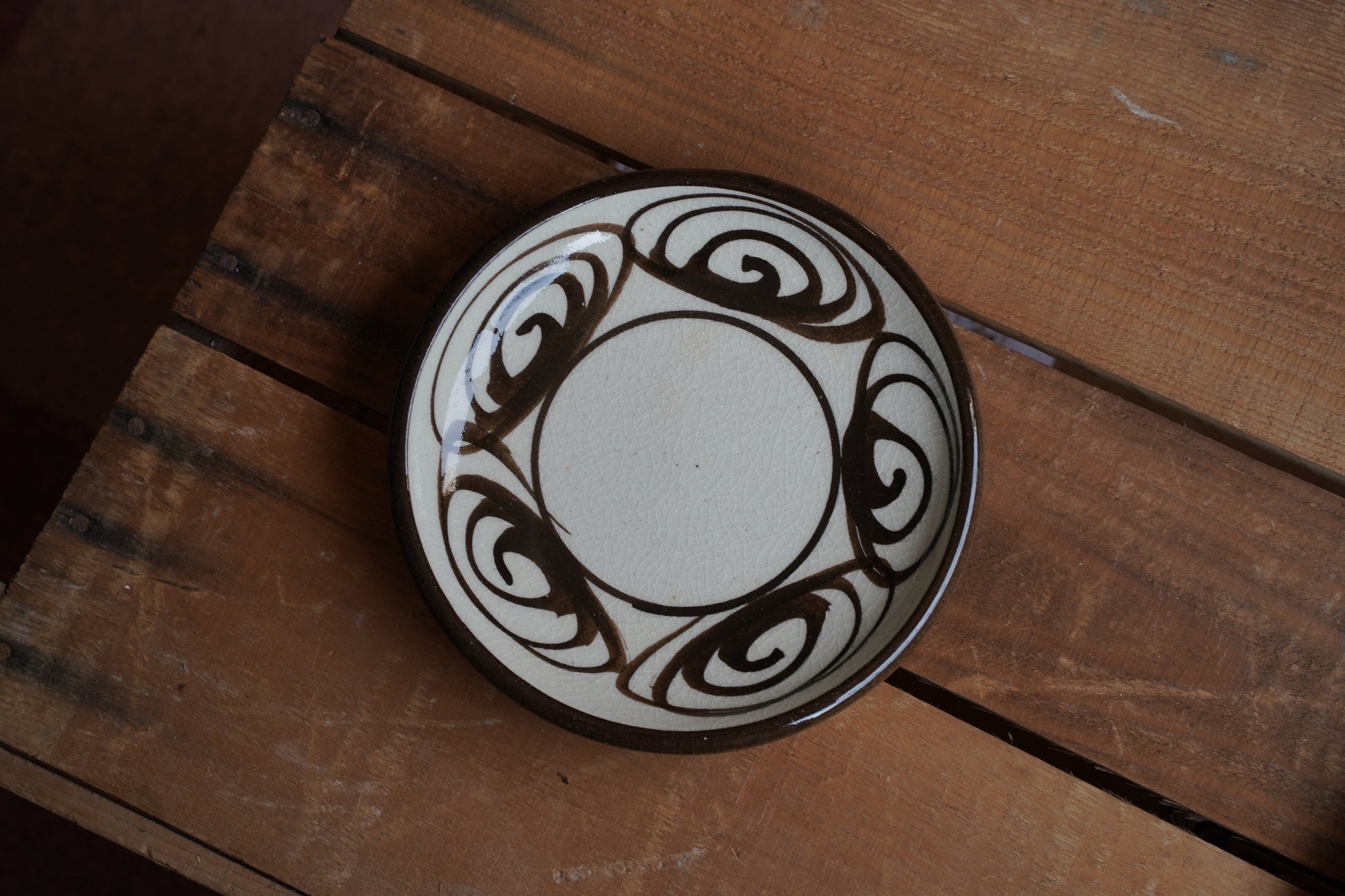
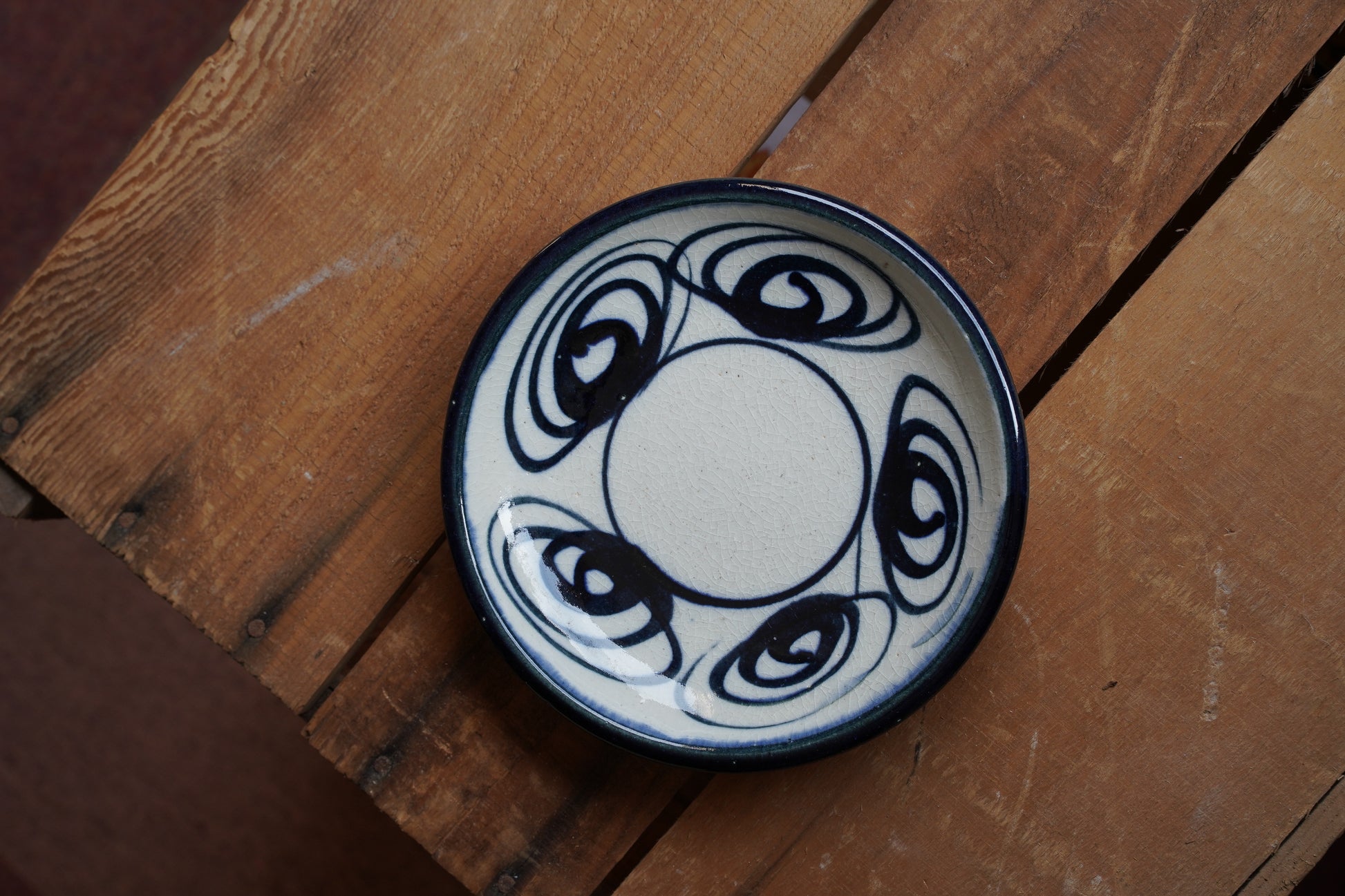
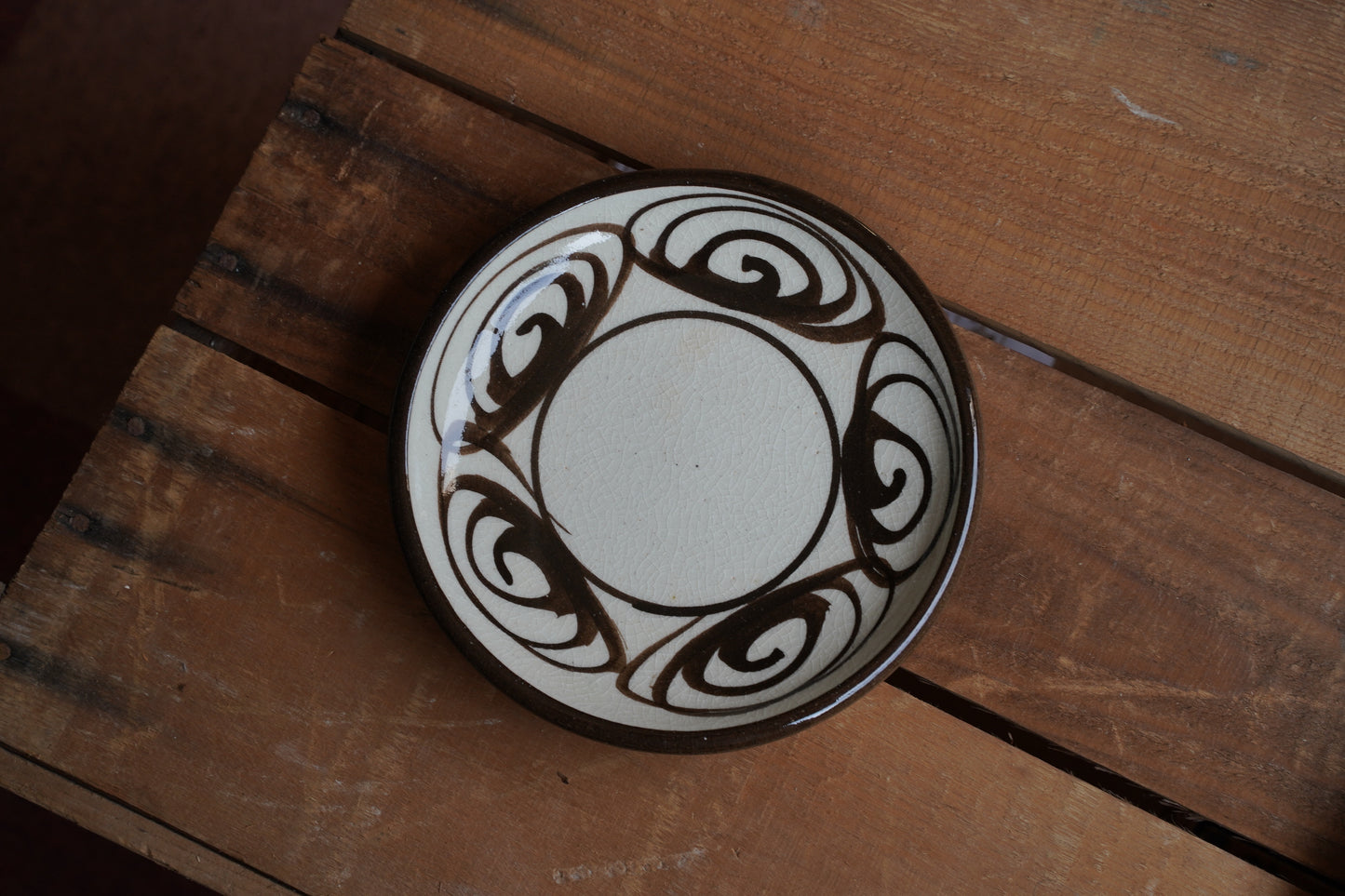
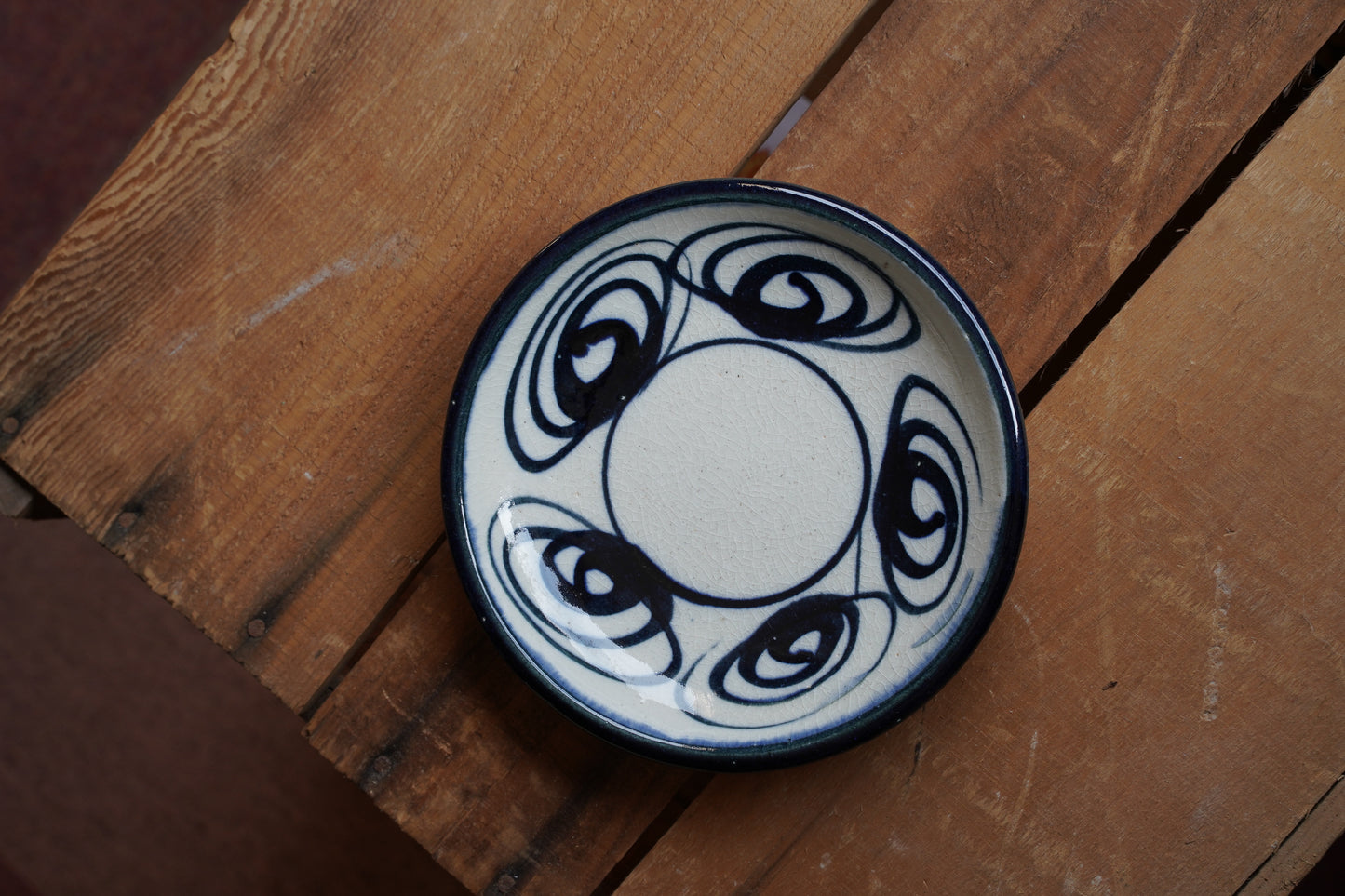
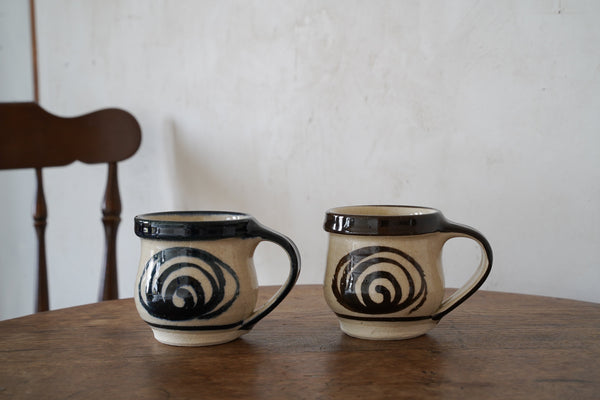
This horse’s-eye plate is made by Setohonyogyo Kiln, which has been operating in Seto City, Aichi Prefecture, since the late Edo period. The horse’s-eye pattern is said to have originated from its resemblance to a horse’s eye, though there are various theories about its origins.
It is a highly traditional design that has been produced primarily in the Seto-Horo area, where Setohonyogyo Kiln is located.
Since ancient times, it has been considered an auspicious motif symbolizing eternal growth and prosperity. Each piece is hand-painted with vigorous brushstrokes by skilled artisans.
A 5-sun plate is highly useful as a side plate or for serving bread and cake.
Horse’s-eye plates beautifully enhance the appeal of the food served on them.

Iron (brown).

Gosui (blue).
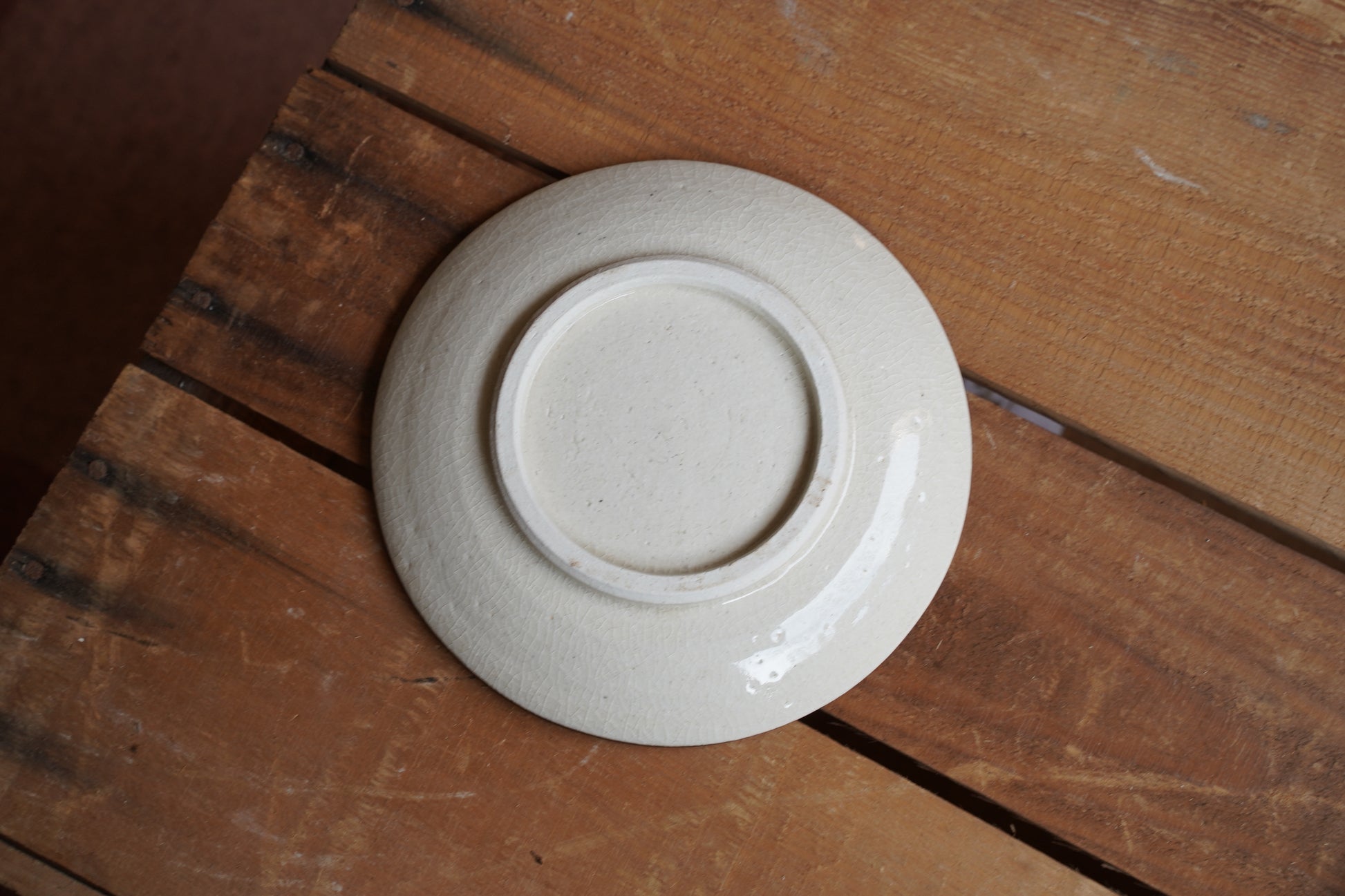
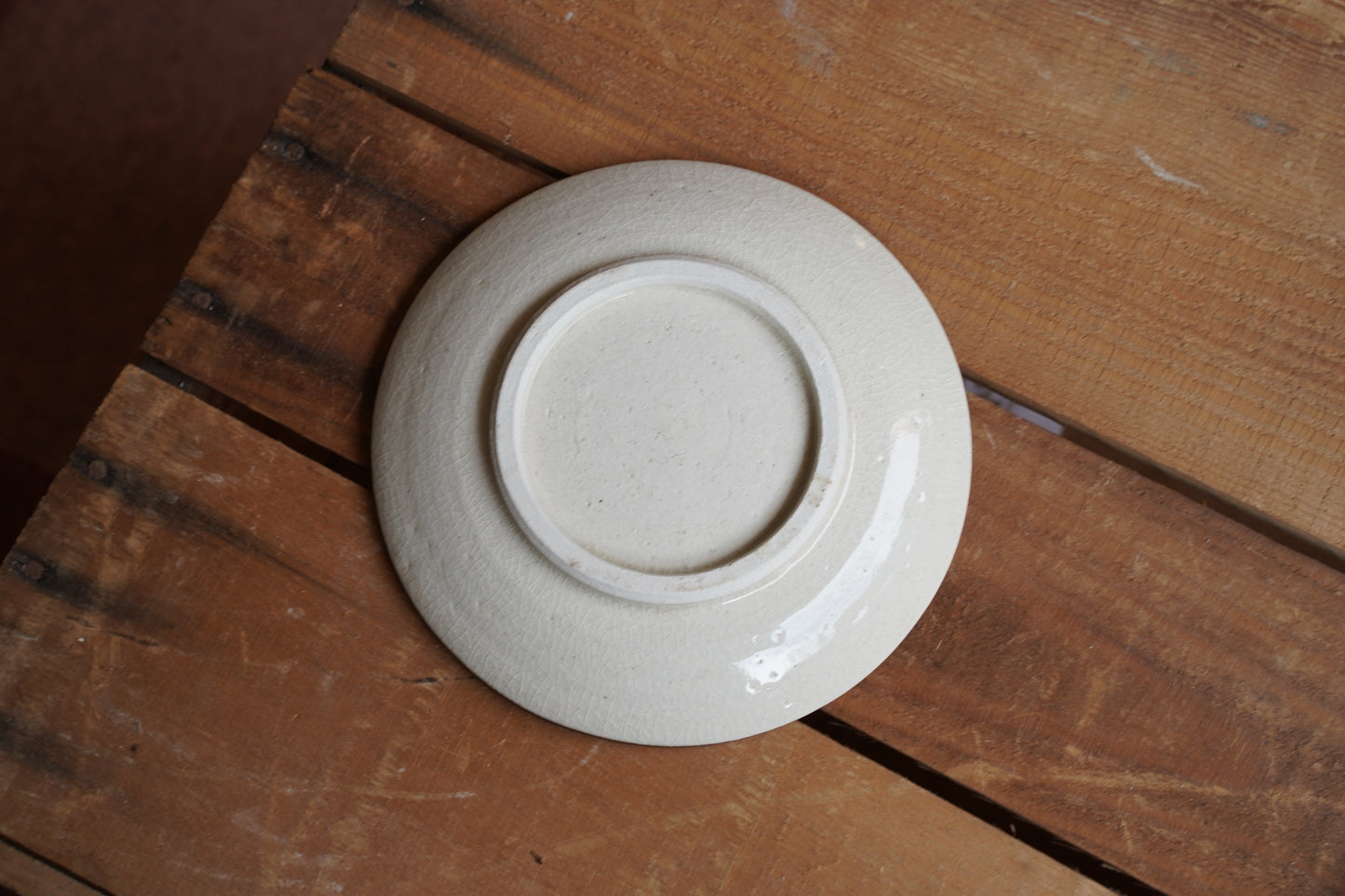
 The underside clearly shows that the plate is made from pure white clay from Seto.

The one on the left is 6.5 sun. The one on the right is 5 sun.
Vessels That Grow
[About the Product]
Name: Horse’s-Eye Plate
Material: Earthenware
Size: 6.5 sun (20.0 cm × 20.0 cm × 3.0 cm high)
Texture: Glossy, with a glass-like glaze.
Microwave: Safe
Dishwasher: Not recommended (but usable)
Oven: Not suitable
Manufacturer: Setohonyogyo Kiln
※Because each piece is thrown by hand on a potter’s wheel, the size and capacity may vary slightly. Please use these measurements as a general guide.
[Care Instructions for First Use]
Before first use, boil the piece in rice-washing water for about 3 minutes. When new, the clay absorbs moisture readily. Avoid leaving drinks in the vessel for extended periods or placing it immediately into a cupboard, as residual moisture may cause mold. If mold appears, simply wash it off, as it only affects the surface and is harmless. It will gradually settle with continued use.
This work is carried out entirely with natural materials. No harmful chemicals such as lead or cadmium are used, and the glaze and clay are prepared using traditional methods. We hope you will understand the inherent characteristics of natural clay.
[Returns and Exchanges]
For returns or exchanges due to personal reasons, the customer is responsible for round-trip shipping costs. Even if the item is unused, returns or exchanges due to differences in size, design, or color from what was expected will be considered a customer return. Please note that the product’s color and texture may differ slightly from the actual item depending on your browser, monitor performance, and settings.
[Introducing the Makers of Seto]
Handcrafted Living. Setohonyogyo Kiln, a Pottery Kiln with a History Dating Back to the Edo Period

Setohonyogyo Kiln is located in the Horo area of Seto City, about 1.5 km from Obara-Seto Station.Since the mid-Edo period, it has produced plates and stone dishes featuring the horse’s-eye pattern, and from the Meiji era onward, everyday items such as “Honyogyo tiles,” Japan’s first ceramic tiles.
The kiln continues to produce items that remain close to the craft of Seto, which has been practiced since the Edo period or even earlier.
“Honyogyo” refers to earthenware. Because Seto has long been known for earthenware, newly developed porcelain is called “shinsei.”

Horo was once a town nestled in a valley between two mountains, and it is said that countless climbing kilns were built on the hillsides in the past. It was during that time that “kamagaki,” walls built to support the climbing kilns and store their tools, were created. The townspeople have spent years preserving them.
The approximately 400-meter stretch of kamagaki that once served as the main thoroughfare for artisans is now known as the Kamagaki Path and retains the distinctive atmosphere of a pottery-producing area.

In 2022,the “Seto Museum of Craft and Living [Seto Mingeikan]” also opened. The museum houses a climbing kiln designated as a cultural property of Seto City, and its remains suggest that it may have once had 13 chambers.
The museum was established to introduce the local craft culture passed down by previous generations. It also aims to show how vessels connect people and convey the lives of those behind them.
Handcrafted Production

Sayumi Kawai, a working artisan.
At Setohonyogyo Kiln, which continues to pass on the traditional pottery of Seto to the present day, approximately 2,000 pieces are handcrafted each month. The clay is primarily thrown on a potter’s wheel.

The designs are painted by specialist painters, depending on the pattern.
The kiln uses a division of labor so that each person repeats the same process. This allows them to become more skilled and improves both quality and production speed.
Making Clay from Raw Earth
Throwing and painting are likely the handcrafting processes most people imagine.
But have you ever considered the raw materials used before that?
Setohonyogyo Kiln makes its clay from scratch. Seto produces a high-quality clay known as “kaerume-nendo,” which is considered among the finest in the world.
However, raw earth cannot be used as clay in its natural state.When asked about making the clay, Yusuke Mineno explained the process in great detail.
“We buy raw earth from the mountains of Seto—known locally as shiro-tsuchi, or white clay, and characterized by its kaerume texture—crush it, and pass it through a sieve. Then we mix it with water and let it rest. Kaerume clay is graded, but we deliberately choose a coarser, less refined grade so that the clay does not become too pure.”

“If you try to extract the clay content from raw earth, impurities are gradually removed during the process. This makes the clay more suitable for porcelain. We simply take dried clay that has been dried once and mix it with water, returning it to the state it was in when it was in the mountains. This method is not common. It is a bit unusual.”
Other additions include kibushi clay and chamotte.

This is kibushi clay. It is made by adding water to dried kibushi clay to turn it into a workable clay. It is added to make throwing on the potter’s wheel easier.
It has a strong ability to hold its shape and is favored by sculptors making figures and other models, but because it shrinks considerably, only a small amount is added.

Chamotte is crushed fired clay. It feels rougher than shiro-tsuchi. Kibushi clay shrinks considerably, so chamotte is added to control this shrinkage. Because fired clay has already shrunk once, it is said to be less prone to shrinking further.

This is the mixture. The amount of water added is determined by the clay’s consistency.This is the clay after it has been prepared and left to rest for about one month.

The clay after three months of maturation. It becomes more uniform throughout.

The clay is prepared about once every two months. Before use, it is processed in a clay mixer to knead it.
Glazes Also Made from Natural Materials

Glaze samples.
All the glazes are handmade. Ash glaze is made by burning the Japanese red pine that grows abundantly in the mountains of Seto and using the resulting ash. Copper is added to this base to create a green glaze. Iron is added to make an iron glaze. Rice straw ash is added to create a white glaze.

Gentle hues born from nature.
Seto is truly blessed with the soil needed to make pottery, and its history is reflected in the life of this town.
What We Find Remarkable About Setohonyogyo Kiln
Finally, what we find truly remarkable is that whenever we ask the eighth-generation master, Yusuke Mineno, a question about any one of the items he makes, he always answers immediately.
For example, coffee cups did not originally exist in Japan, and he can explain how they were introduced to Setohonyogyo Kiln. There is a history behind them, a clear reason for their design, and Yusuke is always fully aware of this. We are always moved by his insight. You can experience the truth of his answers for yourself when you use the pieces. We hope you will experience them firsthand.
ABOUT THE MAKER
Seto Hongyo Gama
Setohonyogyo is a pottery studio in Seto City, Aichi Prefecture, with a history dating back to the late Edo period. The studio produces traditional Seto pott...
MORE FROM THE MAKER
Seto Hongyo Gama
-
Setohonyo | Mugiwara Rice Bowl (Small)
Regular price ¥3,300Regular priceUnit price per -
Setohonyogyo | Mugiwara Rice Bowl (Large)
Regular price ¥3,850Regular priceUnit price per -
Setohonyogyo | Mugiwara-de / Tokusa Rice Bowl (Large)
Regular price ¥3,850Regular priceUnit price per -
Setohonyo | Sansai Small Dish, 4 sun
Regular price ¥2,640Regular priceUnit price per