

Setohonyogyo | Horse-Eye Plate (7.5 sun)
Setohonyogyo | Horse-Eye Plate (7.5 sun)
Shipping: ¥700 flat rate / half-price shipping on orders of ¥11,000 or more
Couldn't load pickup availability
FAQ
Is it microwave and dishwasher safe?
Most pieces can be used in the microwave and dishwasher. Please avoid both for pieces with gold or silver decoration, earthenware with crackle glaze, and figurines. Hand washing is recommended for long use.
Will it look exactly like the photo?
Each piece is fired one by one at the kiln, so color, glaze flow and size vary slightly. Please enjoy it as the character of handmade ware.
When will it ship?
Orders ship within 3–5 business days via Yamato Transport. We will email you when it ships.
How much is shipping?
Shipping is ¥700. Orders of ¥11,000 or more get half-price shipping.
What if it arrives broken?
Please email us (masukichi@hitotsuchi.jp) within 7 days of arrival. We will replace or refund it at our cost.
Can I see it in person?
Many pieces are on display at our shop, Masukichi, in Seto, Aichi.


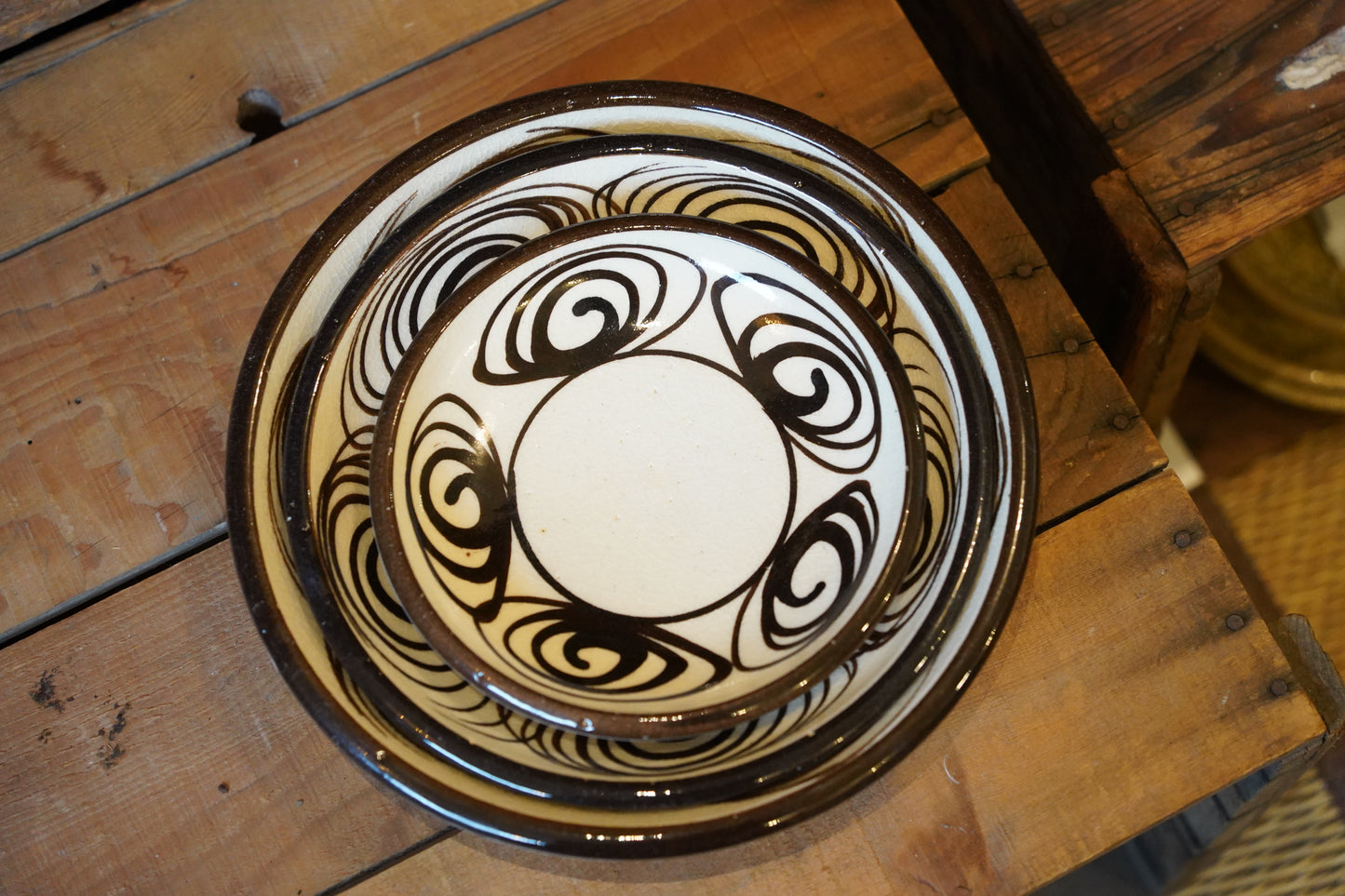
The “Horse’s Eye” Pattern, Also Popular as an Antique
This horse’s-eye plate is made by Setohonyogyo, a kiln in Seto City, Aichi Prefecture, that has been in operation since the late Edo period. While there are various theories about its origin, the pattern is named for its resemblance to a horse’s eye.
It is a highly traditional design that has been produced primarily in the Seto-Horo area, where Setohonyogyo is located.
Since ancient times, it has been considered an auspicious motif symbolizing eternal growth and prosperity. Each piece is individually painted by hand with vigorous brushstrokes.
At 7.5 sun, this plate is the perfect size for serving food for a large group.

Iron (brown).

Gosui (blue).
 Looking at the back, you can clearly see that it is made from pure white Seto clay.

The one on the left is 6.5 sun. The one on the right is 7.5 sun. The bottom one is 5 sun.

You can choose the size depending on your needs.
Pottery That Grows With You
[About the Product]
Name: Horse’s-Eye Plate
Material: Earthenware
Size: 7.5 sun (22.5 cm × 22.5 cm × 4.5 cm)
Texture: Glossy, with a glass-like glaze.
Microwave: Safe
Dishwasher: Not recommended (but usable)
Oven: Not suitable
Manufacturer: Setohonyogyo
※Because each piece is thrown on the wheel individually, sizes and capacities may vary slightly. Please use these measurements as a general guide.
[Care Instructions for First Use]
Before first use, boil the piece in rice-washing water for about three minutes. When new, the clay absorbs moisture readily. Avoid leaving drinks in it for extended periods or placing it immediately back in the cupboard, as residual moisture may cause mold. If mold appears, simply wash it off, as it only affects the surface and is harmless. It will disappear with continued use.
This work is done entirely with natural materials. No harmful chemicals such as lead or cadmium are used, and the glaze and clay are prepared using traditional methods. We hope you will understand the inherent nature of working with clay.
[Returns and Exchanges]
For returns or exchanges due to personal reasons, the customer is responsible for round-trip shipping costs. Even if the item is unused, returns or exchanges due to differences in size, design, or color are considered a personal return. Please note that the product’s color and texture may differ slightly from the actual item depending on your browser, monitor performance, and settings.
[Introducing the Makers of Seto]
Handcrafted Living. Setohonyogyo, a Kiln Dating Back to the Edo Period

Setohonyogyo is located in the Horo area of Seto City, about 1.5 km from Obari-Seto Station.Since the mid-Edo period, the kiln has produced everyday items such as plates and stone dishes featuring the horse’s-eye pattern, and later, Japan’s first ceramic tiles, known as “Honyogyo Tiles.”
Today, the kiln continues work closely related to the craft of Seto that has endured since the Edo period or even earlier.
“Honyogyo” refers to earthenware. Because Seto has long been known for earthenware, the newly developed porcelain was called “Shinsei.”

Horo was once a town nestled in a valley between two mountains, and it is said that countless climbing kilns were built on the mountain slopes in the past. It was during that time that “kamajiki,” fences built from the stacking of kiln tools used in climbing kilns,were created. The townspeople have spent years preserving them.
This 400-meter stretch of kamajiki marks the main street where artisans once came and went. It is now known as the Kamajiki Path and retains the distinctive atmosphere of a pottery-producing area.

In 2022,the Seto Museum of Craft and Living Culture [Seto Mingeikan] also opened. The museum housesSeto City’sdesignated cultural property climbing kiln, which is said to have once had 13 chambers, and its remains still hint at that past.
The museum was established to share the local craft culture passed down by previous generations. It also aims to show how pottery connects people and convey the “lives” of the people behind it.
Handcrafted Production

Sayumi Kawai, a working artisan.
Setohonyogyo, which continues to pass on the traditional world of Seto pottery to the present day, handcrafts approximately 2,000 pieces every month. The pieces are primarily thrown on the wheel.

The designs are painted by professional painters, depending on the pattern.
By adopting a division of labor, each person repeats the same process. This allows them to become highly skilled and improves both quality and production speed, which is why the kiln uses this system.
Making Clay from Raw Earth
Throwing and painting are likely the types of handcrafts most people imagine.
But have you ever thought about the raw materials that come before?
Setohonyogyo makes its clay from scratch. Seto produces a high-quality clay known as “frog’s-eye clay,” which may be the finest in the world.
However, raw earth cannot be used as clay in its natural state.When I asked Yusuke about making the clay, he explained it to me very thoroughly.
“We buyraw earth gathered from the mountains of Seto (known locally as white clay, it is filled with frog’s-eye inclusions), crush it into powder, and pass it through a sieve. Then we mix it with water and let it rest. Frog’s-eye clay is graded, but we deliberately choose a coarser, less refined variety so that it does not become too pure.”

“If you try to extract the clay content from raw earth, impurities are gradually removed in the process. This causes the clay to become more like porcelain clay. We simply take dry clay that has been dried once and mix it with water, returning it to the state it was in when it was in the mountains. This method is not common. It is a bit special.”
Other additions include wood-knot clay and chamotte.

This is wood-knot clay. It is made by adding water to dry wood-knot clay to turn it into workable clay. It is added to make throwing on the wheel easier.
It has a strong ability to hold its shape and is favored by sculptors making figures and other models, but because it shrinks so much, only a small amount is added.

Chamotte is crushed fired clay. It feels rougher than white clay. Wood-knot clay shrinks significantly, so chamotte is added to control this shrinkage. Because fired clay has already shrunk once, it is said to be less prone to further shrinkage.

This is the mixture. The amount of water added is determined by the clay’s consistency.This is the clay after it has been prepared and left to rest for about one month.

The clay after three months of maturation. The mixture becomes more uniform.

The clay is prepared about once every two months. Before use, it is run through a clay mixer to knead it.
Natural Materials Are Also Used for the Glazes

Glaze samples.
All the glazes are also handmade. Ash glaze is made by burning and grinding the Japanese red pine trees commonly found in the mountains of Seto. Copper is added to this base to create a green glaze. Iron is added to make an iron glaze. Rice straw ash is added to create a white glaze.

Gentle hues born from nature.
Seto is truly blessed with the soil needed to make pottery, and its history is reflected in the life of the town.
What We Find So Remarkable About Setohonyogyo
Finally, what we find truly remarkable is that whenever we ask Yusuke Mizuno, the eighth-generation kiln master, a question about any one of the pieces he makes, he always answers immediately.
For example, he can explain how the coffee cup, which was not originally a Japanese invention, came to Setohonyogyo. There is a history behind it, a clear reason, and Yusuke himself is always fully aware of this. We are always moved by that. You can truly feel the answer when you use the piece. We hope you will experience it for yourself.
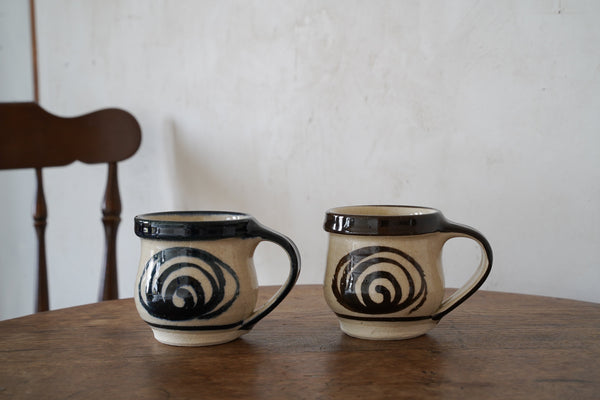
ABOUT THE MAKER
Seto Hongyo Gama
Setohonyogyo is a pottery studio in Seto City, Aichi Prefecture, with a history dating back to the late Edo period. The studio produces traditional Seto pott...
MORE FROM THE MAKER
Seto Hongyo Gama
-
Setohonyo | Mugiwara Rice Bowl (Small)
Regular price ¥3,300Regular priceUnit price per -
Setohonyogyo | Mugiwara Rice Bowl (Large)
Regular price ¥3,850Regular priceUnit price per -
Setohonyogyo | Mugiwara-de / Tokusa Rice Bowl (Large)
Regular price ¥3,850Regular priceUnit price per -
Setohonyo | Sansai Small Dish, 4 sun
Regular price ¥2,640Regular priceUnit price per


