
Toy Workshop | Spinning Top Dog
Toy Workshop | Spinning Top Dog
Shipping: ¥700 flat rate / half-price shipping on orders of ¥11,000 or more
Couldn't load pickup availability
FAQ
Is it microwave and dishwasher safe?
Most pieces can be used in the microwave and dishwasher. Please avoid both for pieces with gold or silver decoration, earthenware with crackle glaze, and figurines. Hand washing is recommended for long use.
Will it look exactly like the photo?
Each piece is fired one by one at the kiln, so color, glaze flow and size vary slightly. Please enjoy it as the character of handmade ware.
When will it ship?
Orders ship within 3–5 business days via Yamato Transport. We will email you when it ships.
How much is shipping?
Shipping is ¥700. Orders of ¥11,000 or more get half-price shipping.
What if it arrives broken?
Please email us (masukichi@hitotsuchi.jp) within 7 days of arrival. We will replace or refund it at our cost.
Can I see it in person?
Many pieces are on display at our shop, Masukichi, in Seto, Aichi.
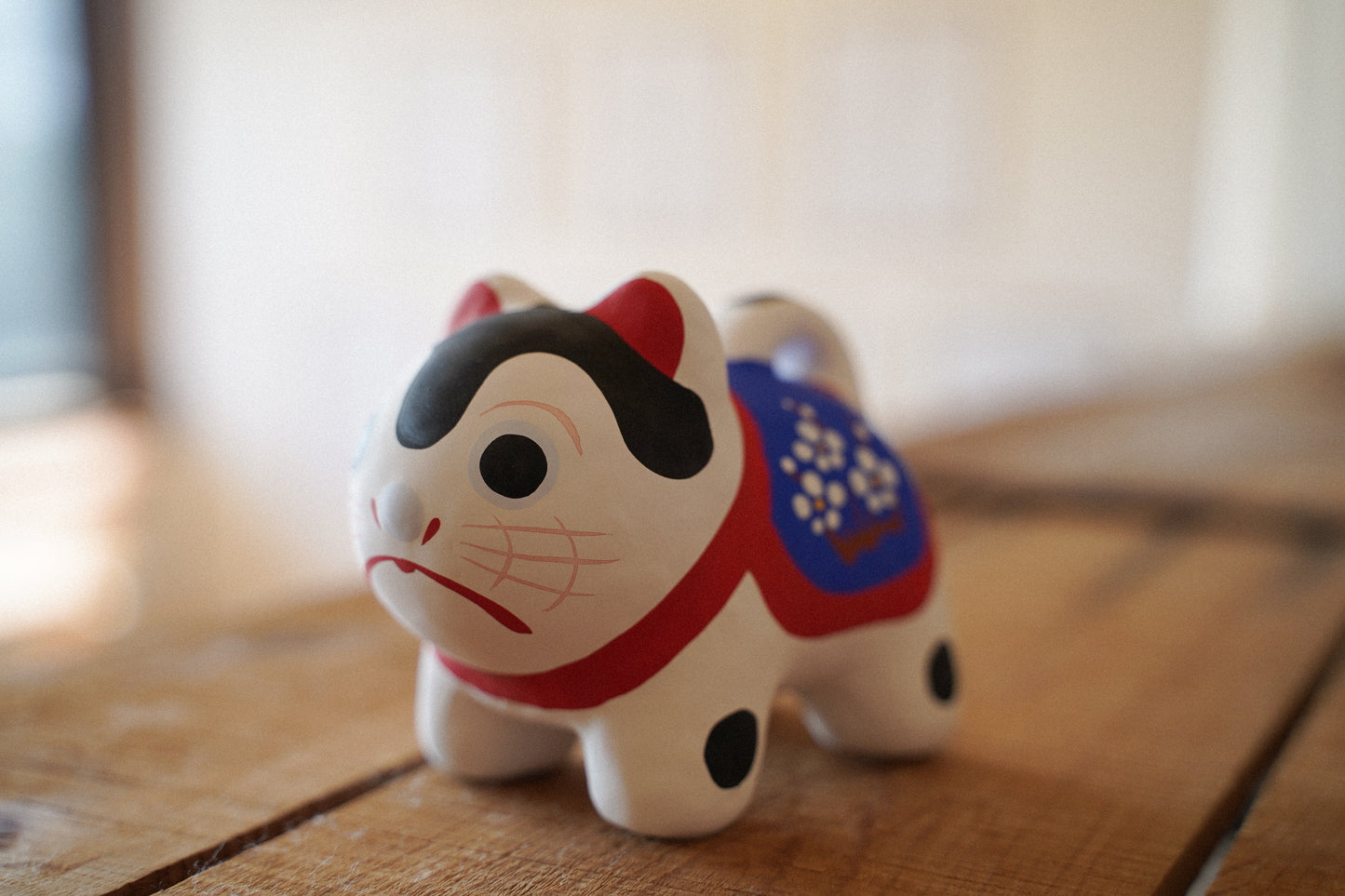
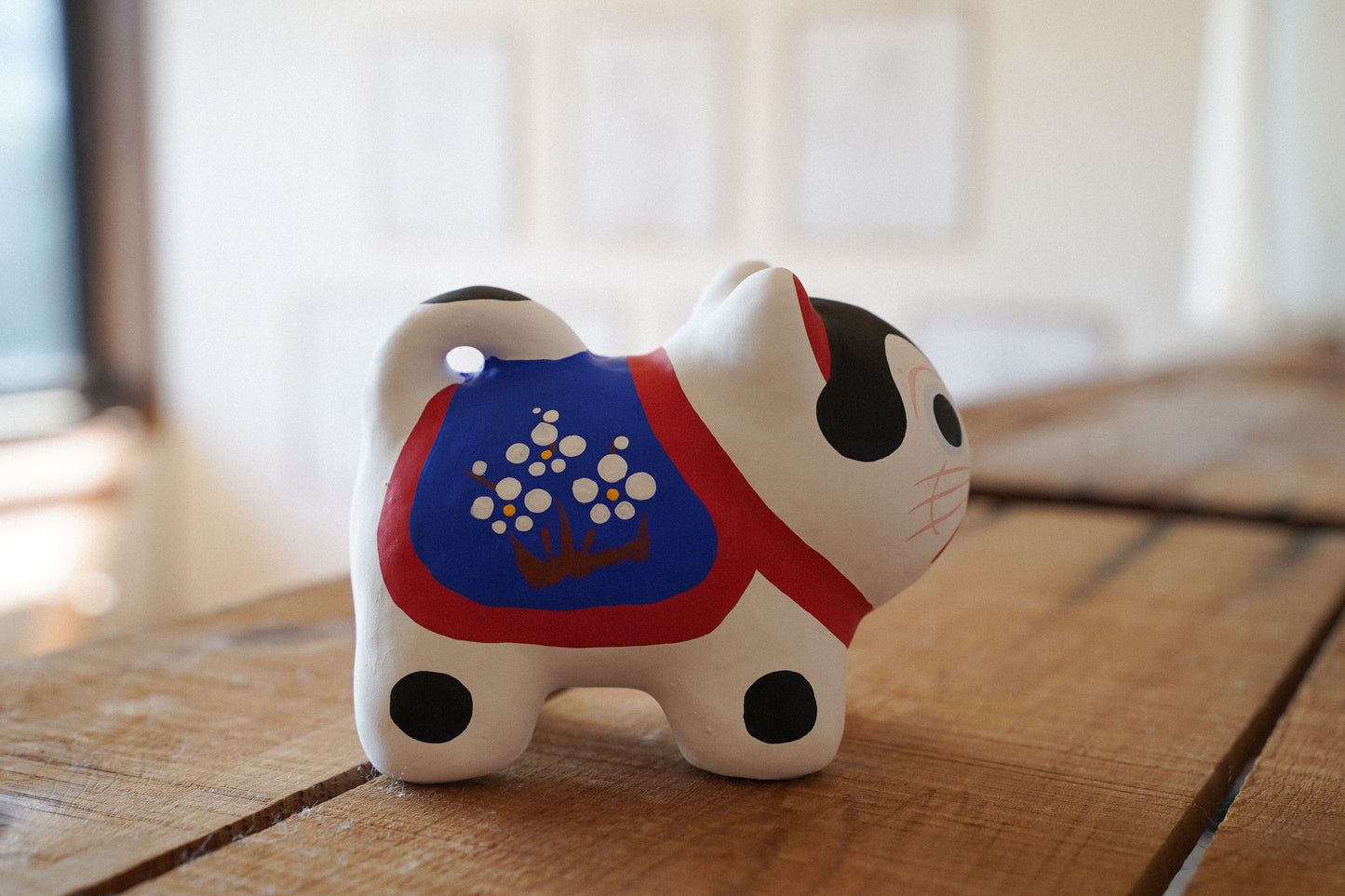
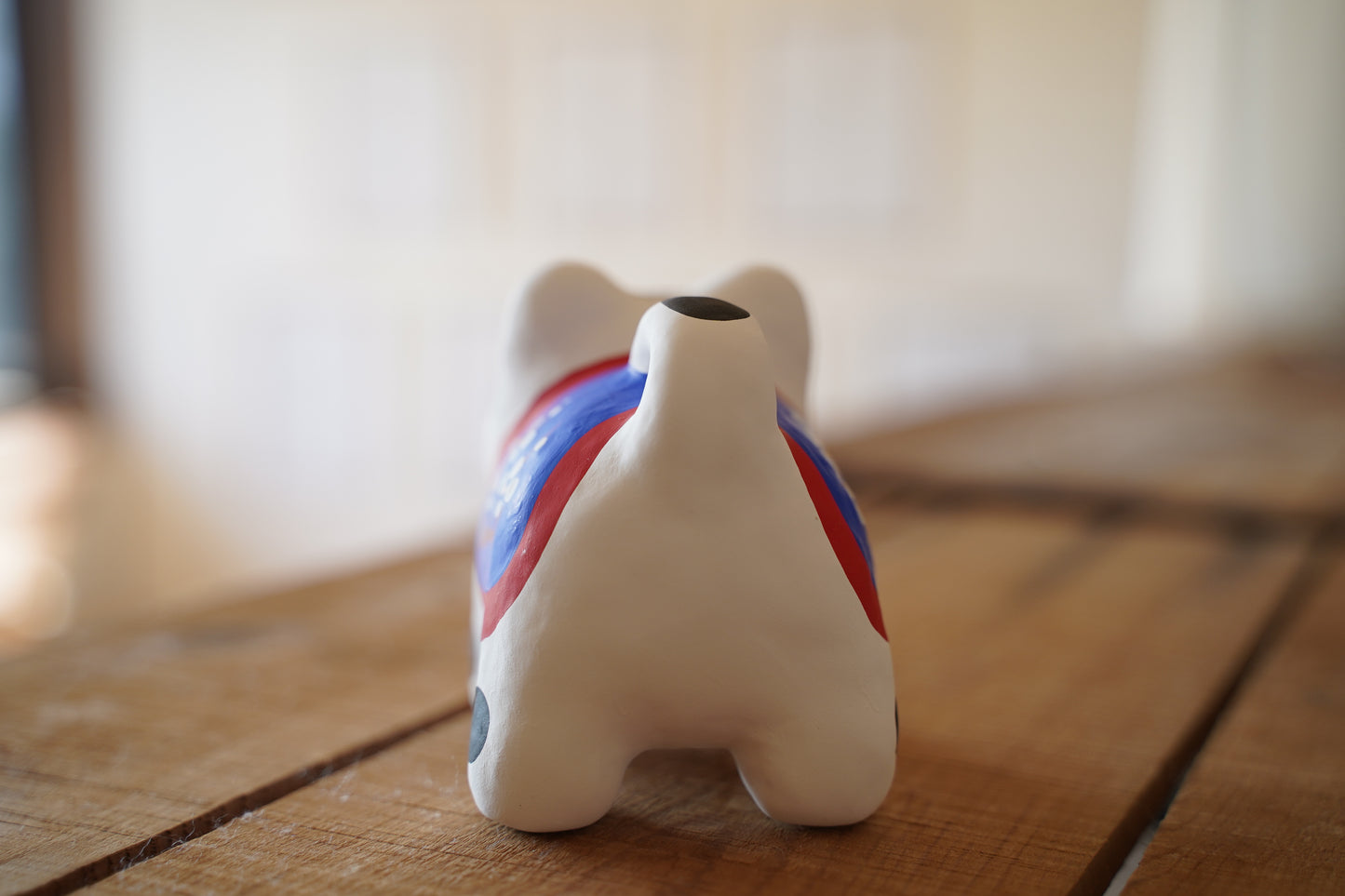
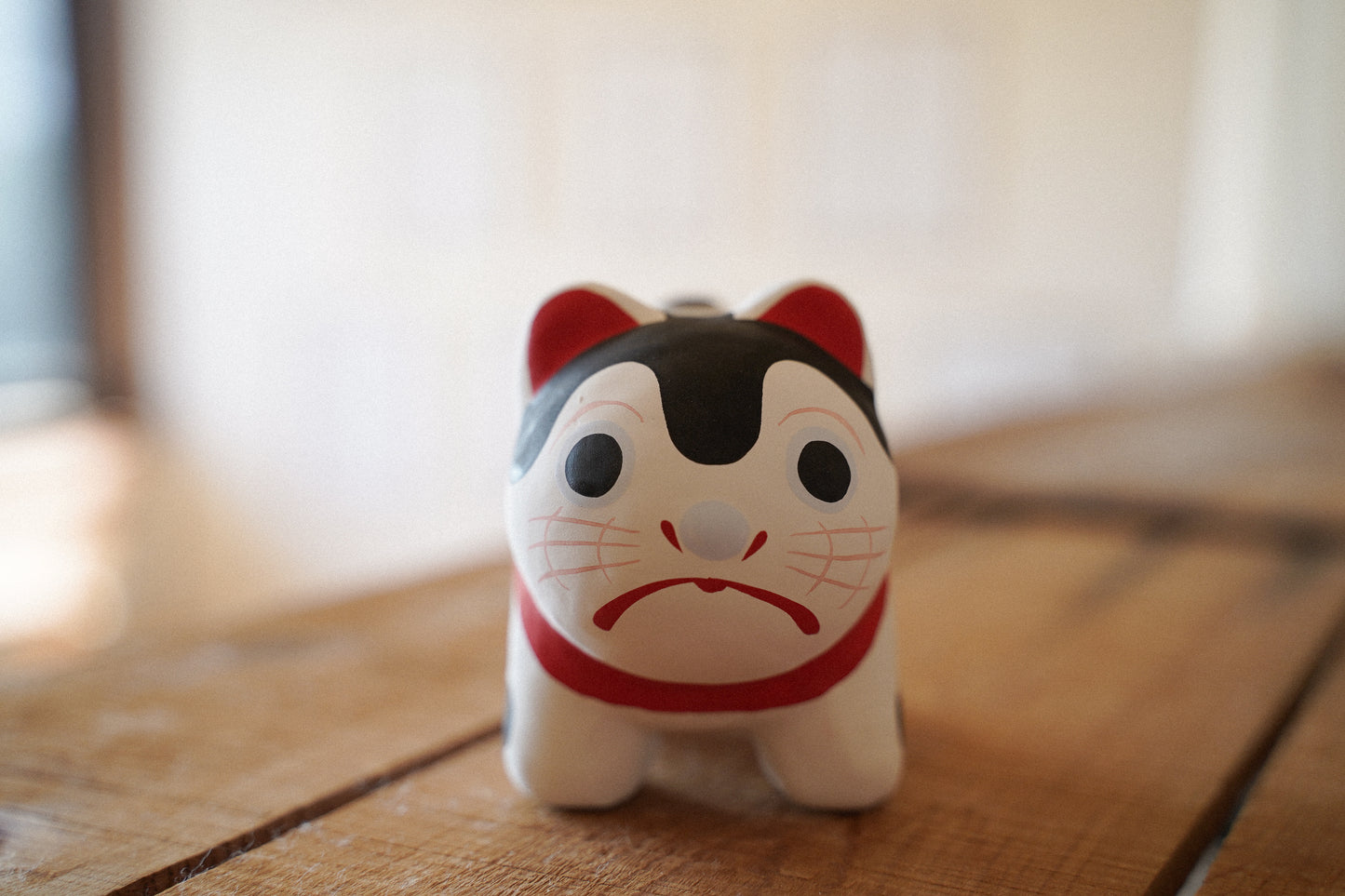
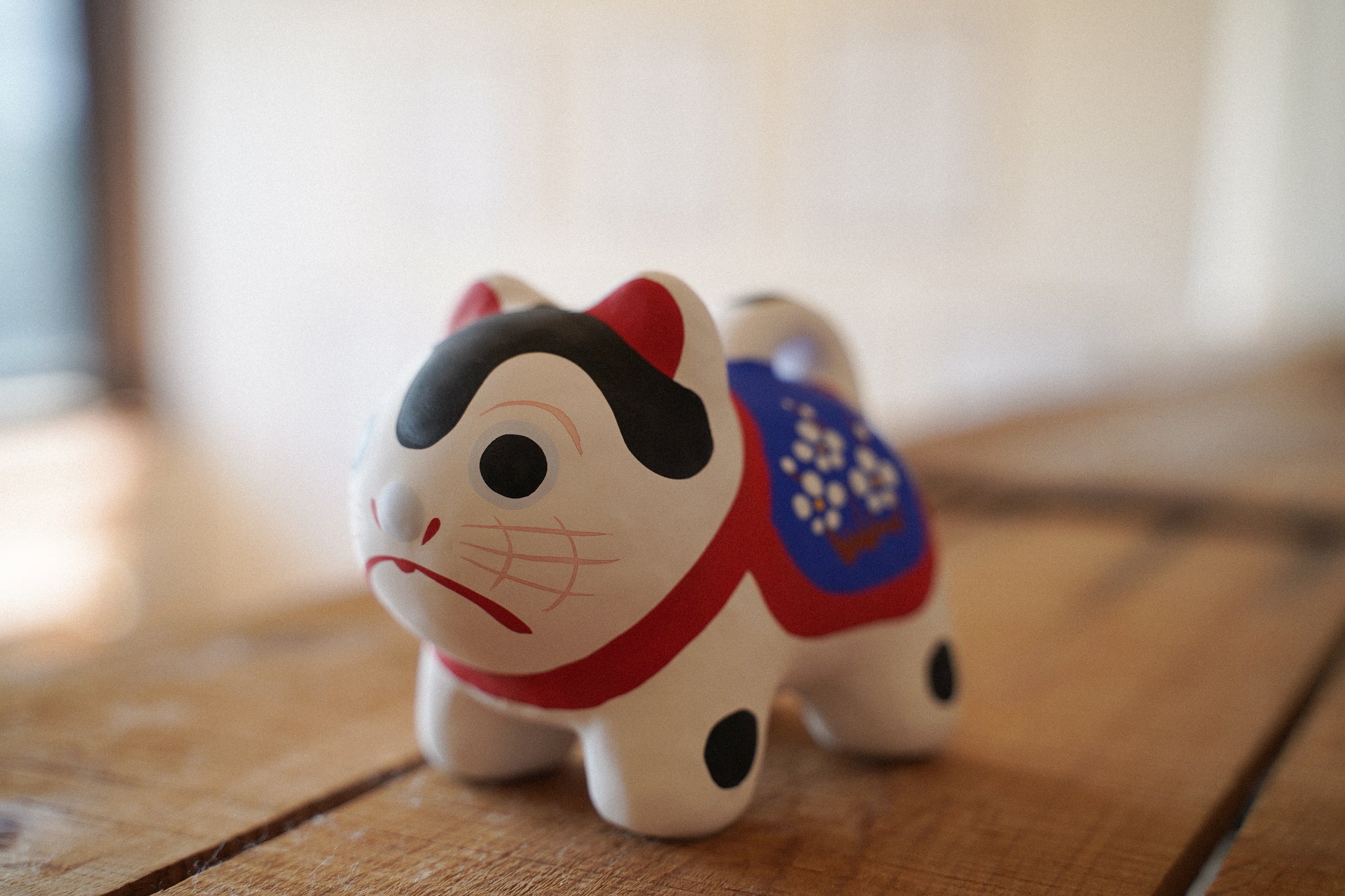
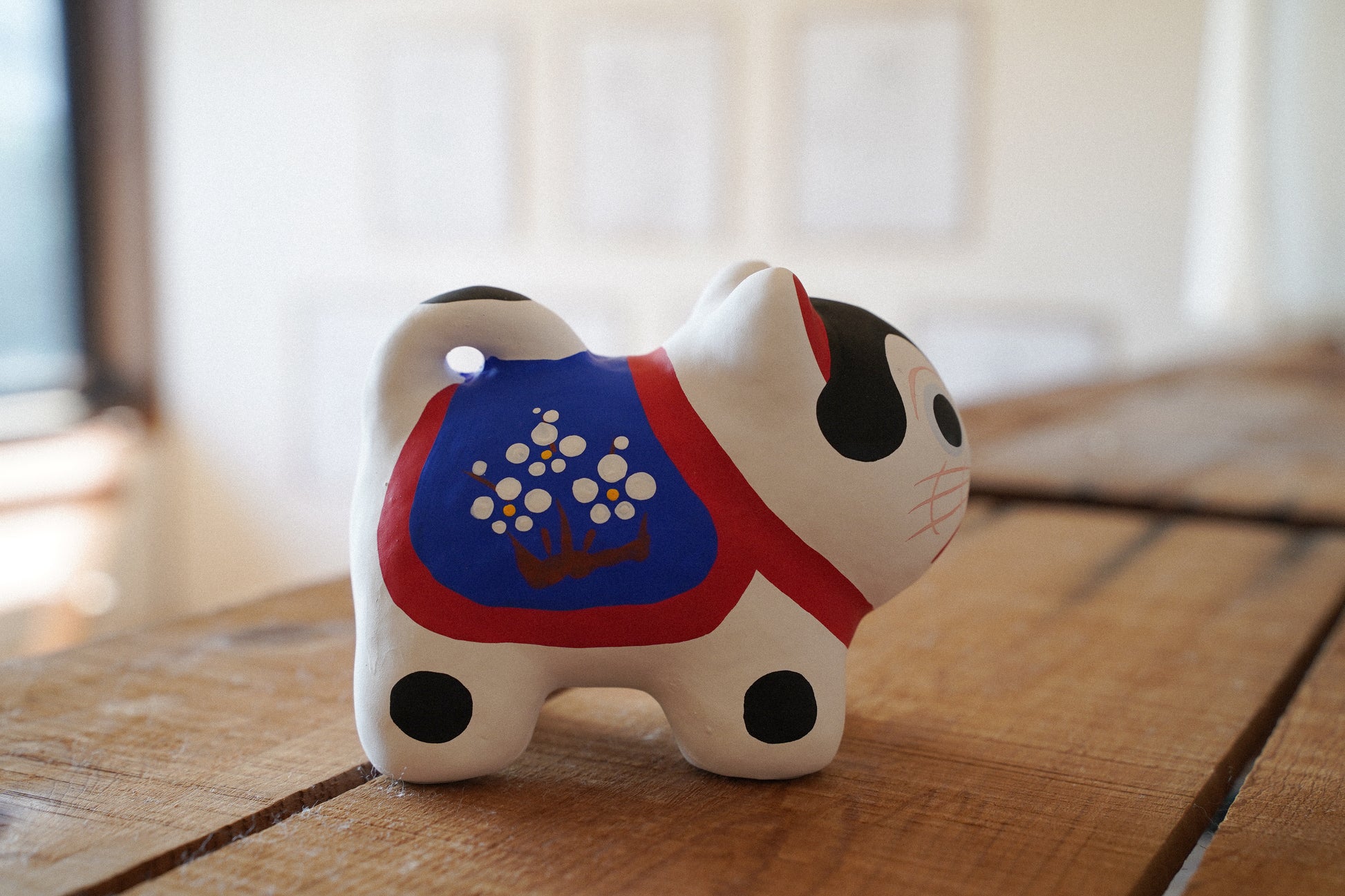
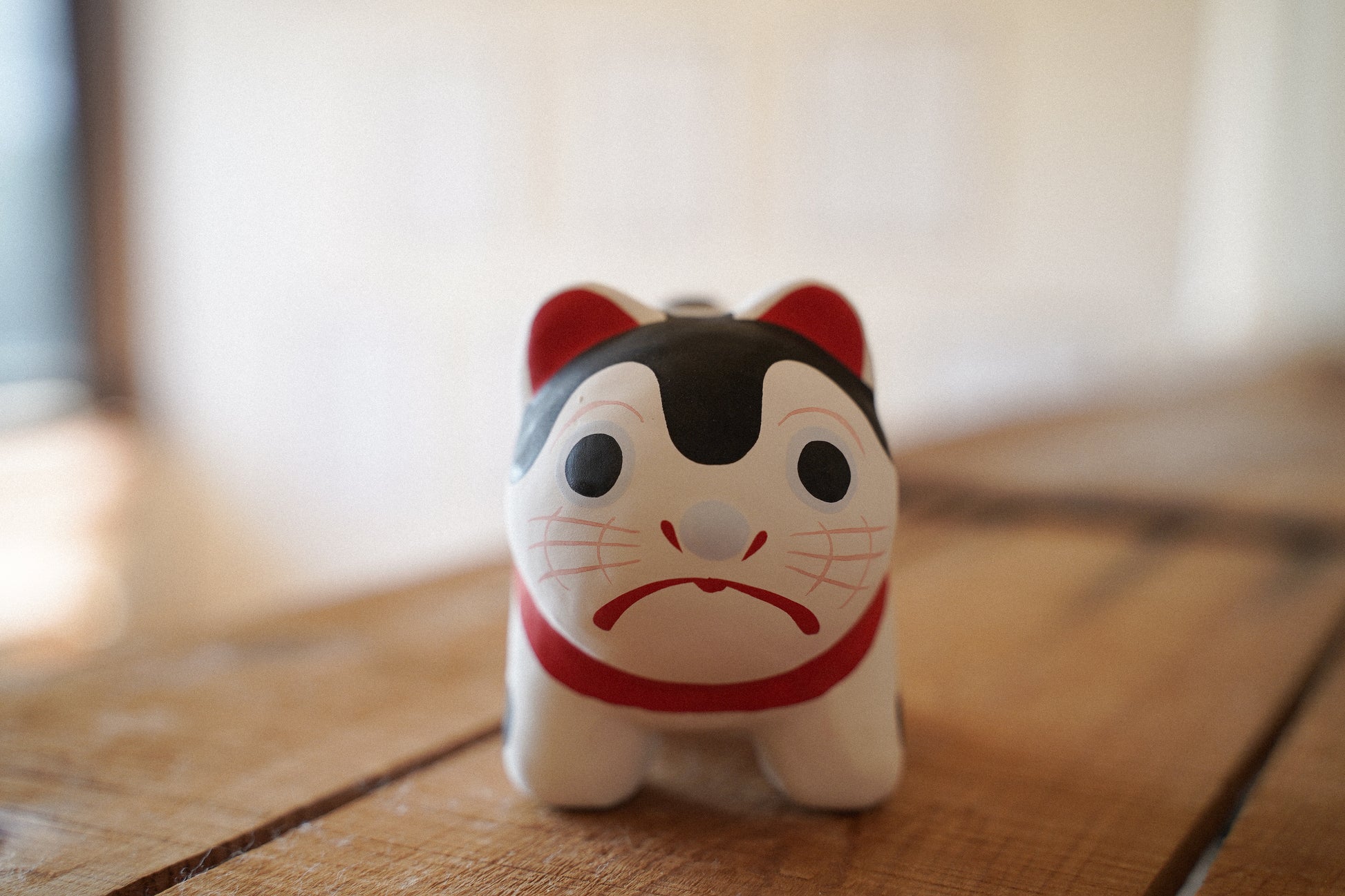
This is a “Koma-inu” charm for praying for a safe delivery.
Children are a joy and a blessing in any era.
Dogs are said to have easy births and have long been considered symbols of safe delivery.
Just as “Eighty-Day Pilgrimages” are held at shrines, the custom of wrapping a maternity belt around the belly on the “Day of the Dog” in the 5th month continues, as the Koma-inu is believed to ward off evil spirits and protect babies.
[About the Product]
Product Name: Koma-inu
Material: Ceramic
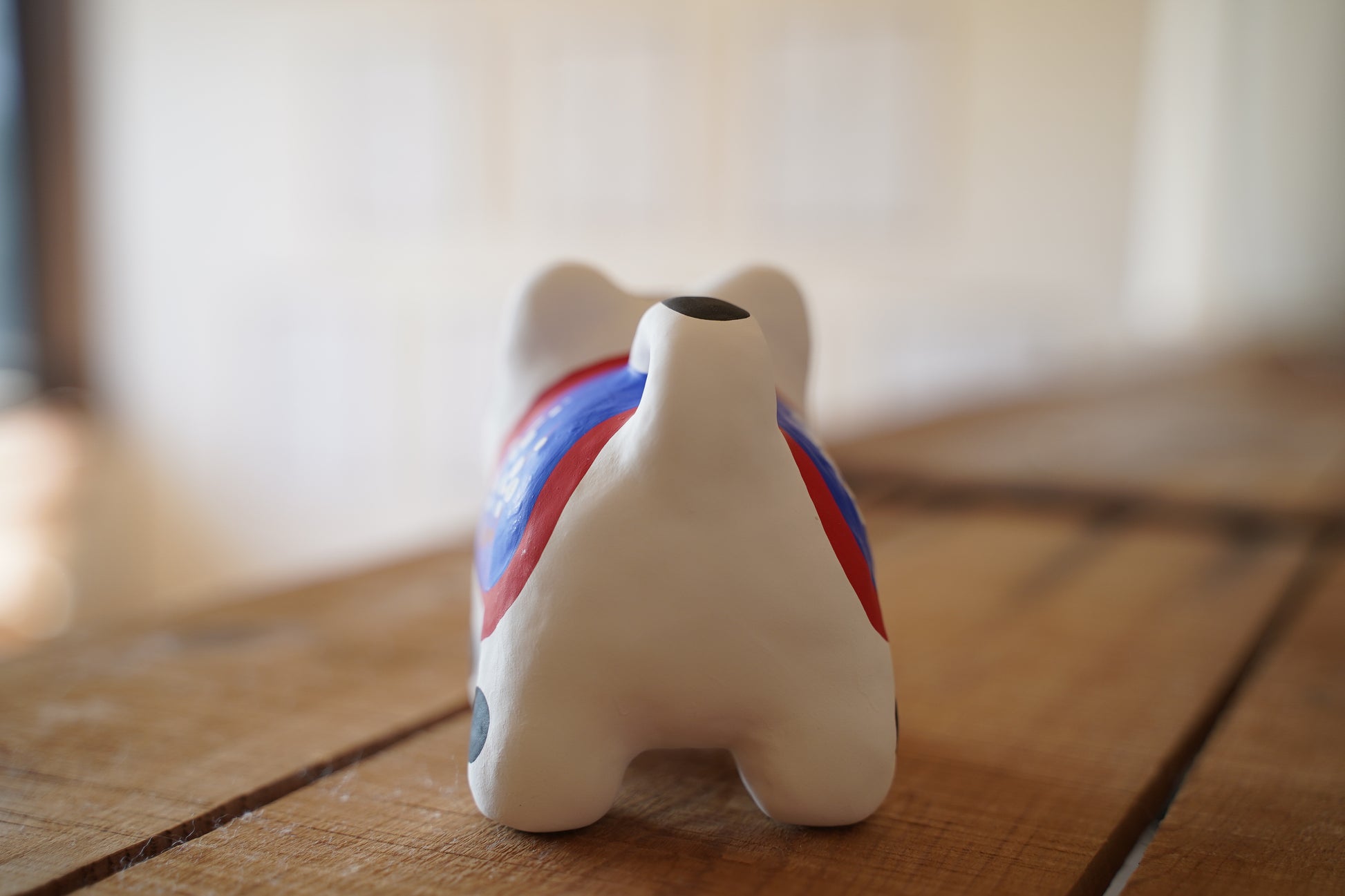
Size: Height 8.7 cm x Width 11.2 cm x Depth 6.9 cm
Finish: Matte
Manufacturer: Seto Tokugeisha
The matte finish is painted with pigments on a pure white surface that retains the texture of unglazed clay.
As each piece is hand-painted, the facial expressions vary slightly.
[Introducing the Makers of Seto]
Experts in hand-painted ceramic figurines. Craftsmanship completed entirely in Seto.
 Photo: Mari Mizuno of “Seto Tokugeisha” and her husband Yusuke Mizuno, producer of “Omocha Kobo.”
“Omocha Kobo” is a local toy brand founded by “Seto Tokugeisha,” a ceramic figurine workshop that has been in operation since 1951. This workshop handles everything from planning and prototyping to mold-making, casting, firing, and painting.
“Seto Tokugeisha” began when Mari Mizuno’s grandfather started a ceramic figurine workshop for the domestic market. In the early days, the workshop was busy with orders for Fushimi dolls from Kyoto, and it is said that Kyoto-bound shipments left almost every week.
In Seto, the production of export goods increased during the Meiji era, and a system for mass-producing ceramic figurines was established. Items made in Seto were called “Seto Novelties,” and their elaborate forms and delicate painting were highly acclaimed overseas. By the 1960s, more than 300 novelty-related companies had formed in the city, supporting Seto’s post-war craftsmanship.
Later, when the Plaza Accord was signed in 1985, the yen appreciated from 360 yen to the dollar to the 70-yen range, and most companies switched to different businesses. However, because “Seto Tokugeisha” focused on production for the domestic market, it continued to receive many orders from shrines and other institutions, a tradition that continues today.
Original Local Toys “Omocha Kobo”

“Omocha Kobo” is produced by Yusuke Mizuno, the eighth-generation successor of “Seto Hongyokama,” a ceramic business with over 250 years of history. Both come from families of ceramic artisans, and they continue to create modern products while preserving tradition with mutual support.
“I decided to start Omocha Kobo because I wanted to pass on traditional Japanese customs in a proper form. However, if we kept the original motifs, people wouldn’t take notice. So, we remade the colors of existing items and gave them slight redesigns, presenting them as original brand local toys. Since many people living in nuclear families may not know about old customs, I want to redefine them once again.” (Yusuke Mizuno)
As the eighth-generation successor of “Seto Hongyokama,” Yusuke usually creates vessels using Seto clay and natural glazes, working by hand on a potter’s wheel in a tradition dating back to the Edo period. In addition to this, he uses his talents as a producer to create new products through Omocha Kobo!
The Omocha Kobo Production Process

Omocha Kobo designer Asuka Kifushiro creates all the designs.
This is the original drawing. An in-house sculptor creates the prototype based on this two-dimensional drawing.
In the hands of a skilled sculptor, a three-dimensional Maneki-neko figure emerges from a single drawing in no time. Because ceramics shrink during firing, the size must be calculated precisely to account for this shrinkage, making it a meticulous process.
Once the prototype is complete, plaster molds are made by an affiliated mold maker in the city to prepare for mass production.

This is the finished plaster mold.At “Seto Tokugeisha,” products are made using a method called “slip casting,” where a clay mixture called “slip” is poured into these plaster molds to form the ceramic pieces.
 Pouring the slip.
The material being poured here is a clay called “Byakko.” It was researched and developed at the former National Ceramic Research Institute in 1931 and created to make novelty products for export.

Plaster absorbs moisture and hardens from the outside in. Once the slip has dried to the desired thickness, the mold is turned upside down and the excess slip is poured out. For this reason, it is also called “gaba casting.”
According to a veteran craftsman with over 20 years of experience, “The clay is alive!” The speed and timing of pouring the clay are carefully considered based on the shape of the product, the season, and the weather. Larger molds are left to dry for about 30 minutes.

Once it has hardened, the mold is removed.

The Maneki-neko figure has emerged! When it is removed from the mold, a line-like seam called a “flash” forms between the two halves of the mold, so this is smoothed out.

The “flash” remaining after removing it from the mold is trimmed.

A damp cloth is used to give it an even smoother finish.

The work is carried out right behind the casting area.

It is fired in an electric kiln on the same floor at approximately 1,030 degrees.

After firing, it becomes pure white. Ceramic paints are then used to paint the design. There is no preliminary sketch; the design is painted all at once with a brush while looking at a sample.


It is complete!
[Handling Precautions]
・This is a fragile item, so please handle it with care.
・As it has not been fired after painting, please be careful with water.
[Returns and Exchanges]
Each of these items is entirely handmade. Therefore, even slight differences in the thickness of lines may result in slightly different facial expressions. Thank you for your understanding.
We apologize for the inconvenience, but even if the item is unused, returns and exchanges due to differences in size, design, or color from what you expected will be at your expense for round-trip shipping. Thank you for your understanding.
ABOUT THE MAKER
Gangu kobo
These ceramic lucky charms are made by Toy Factory, a traditional toy maker in Seto City, Aichi Prefecture. Seto artisans handcraft each piece, including ann...
MORE FROM THE MAKER
Gangu kobo
-
Toy Workshop | Good Fortune and Future Blessings (White)
Regular price ¥880Regular priceUnit price per -
Toy Workshop | Good Fortune & Future Blessings (Beige)
Regular price ¥880Regular priceUnit price per -
Toy Workshop | Good Fortune and Future Prosperity (Black)
Regular price ¥880Regular priceUnit price per -
Toy Workshop | Lucky Unearthly Bell (Ema)
Regular price ¥1,210Regular priceUnit price per


